From idea to agent…

Here’s a thing: The Witch’s Kiss is our debut, but it’s not actually the first book that Liz and I have written together.

We began TWK in the summer of 2014, but we’d started writing together two years earlier, on a project I’m going to call Rookie Novel 1. RN1 took a long time to get into shape. More than 18 months passed before we thought it was up to sending out to agents (perhaps at some point I’ll post up here for your amusement the ABSOLUTELY HORRIBLE query letters we wrote back at the beginning). But – lack of experience notwithstanding – we did end up with two full manuscript requests for RN1 from big London agencies. Still, that was as far as we got. And two requests on perhaps twenty queries didn’t seem that encouraging. So by mid-2014 we decided we really needed to either forget the whole thing or write something new. (Of course, we were both addicted to writing by then, so something new was really the only option).

Then, after re-reading a bunch of fairy-tales, Liz had an idea: a male sleeping beauty, in some sort of historical setting. And something to do with jars of hearts…


sweets
Probably not this sort of heart.

And I thought: let’s not do medieval. Medieval seems like the go-to setting for fantasy. Let’s do Anglo-Saxon. A male sleeping beauty who is asleep for more than fifteen hundred years.

And we both thought: witches. Twenty-first century witches. How cool would that be?
 

Home
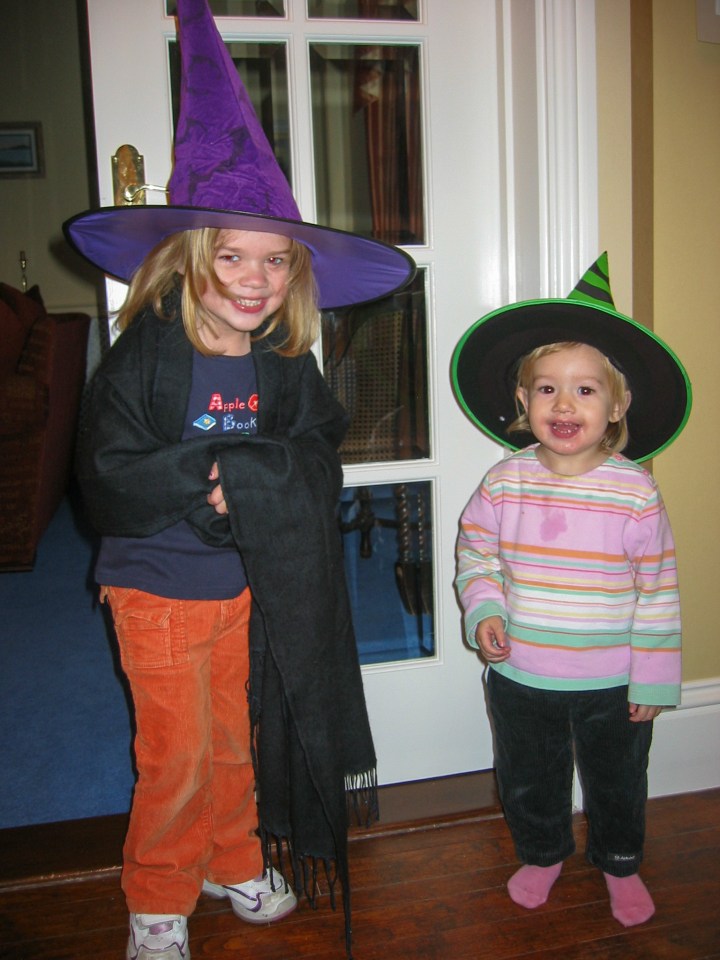
Probably not this sort of witch.


We didn’t start writing straight away. Because we were writing together (and also because we’re both complete control freaks) we like to plan. We wrote an initial 14 page outline. Then a more detailed chapter-by-chapter outline, that was at least twice as long. Then we divided the chapters up and off we went.

More or less.

There was a lot of re-writing. A lot of re-writing stuff the other one had already re-written. A lot of underlining in red and adding comments like: ‘SERIOUSLY???’. But, by the end of five months (November 2014) we did have a complete manuscript. Then we read the whole thing through and decided we needed to completely reorganize the middle sections. That Christmas was kind of busy. Still, by the middle of January we were ready to start submitting again.

The next couple of weeks were fairly….terrifying. (We were not particularly chilled about the whole thing). We were over-the-top nervous about misreading the submission guidelines. We panicked that we were sending out the wrong version of the manuscript, or the wrong manuscript altogether. And every time one of us got an email we had a heart-stopping moment of fear, convinced that a rejection had just landed in the inbox.

But funnily enough, this time turned out not to be that terrible at all. Within a couple of weeks, we had three offers of representation from three fabulous agents. We had a choice!

We chose the lovely Claire Wilson from RCW, and that is definitely one of the best decisions we’ve ever made in our short writing career.

Next week, I’ll write about the next stage of the process: from agent to bookshelf.

Once upon a time…

There was an article in the Telegraph a few weeks back titled ‘Fantasy books such as Game of Thrones can damage children’s brains’. The article was quoting a head-teacher who recommended younger children should be protected from the “damaging effects” of fantasy literature, including Harry Potter, Lord of the Rings and Terry Pratchett.

51MeTsVzOZL._SX328_BO1,204,203,200_

0001428
And also, presumably, Ladybird Books

Frankly, I think this is ridiculous.

So much of classic literature is based in fantasy: The Odyssey, Beowulf, The Tempest. And fairy tales are important. As usual, Neil Gaiman puts it brilliantly: ‘Fairy tales are more than true: not because they tell us that dragons exist, but because they tell us that dragons can be beaten.’

So children should definitely be allowed to read Harry Potter. And adults should be allowed to read fairy tales. Taken as a whole, they present a pretty complex view of life. Magic fixes things for Cinderella, but nearly costs Rumplestiltskin’s victim her baby. Prince Charming is always a hot guy, but Beauty and the Beast shows that what’s inside a person is more important than good looks. I guess that’s why fairy tales can be re-imagined over and over so successfully.

The fairy tale at the root of The Witch’s Kiss is Sleeping Beauty, versions of which have been around for at least 700 years if you include the ‘Brynhildr falling asleep in her armour’ story in the Völsunga Saga. And it’s still going strong. Liz and I love Maleficent, in which the villain becomes the hero, and one of my favourite Christmas presents this year was The Sleeper and The Spindle, Neil Gaiman and Chris Riddell’s gorgeous Snow White / Sleeping Beauty mash up. Our starting point was the idea of a male sleeping beauty set in a real historical time period. What would happen if the sleeper – together with the person who cursed him – woke up in twenty-first century England?

Less than six weeks now, and you can find out!

Sister Act

I write books with my little sister, Elizabeth. And on 30th June (that’s only seven weeks away. SEVEN WEEKS!), our debut novel, The Witch’s Kiss, will be published by HarperCollins.

And that’s not a sentence either of us really thought we’d actually get to write.

The first thing most people ask when we meet them (if the whole writing thing comes up), is something along the lines of:

So how does that work, writing together? I would go mad if I had to work with my sister/brother/other family member. I’d probably kill her/him. How come you two haven’t killed each other?

Well, we’ve been writing together for nearly four years now, and we haven’t killed each other yet. There’s been some yelling, some angry-face emojis, but no actual bloodshed. So what is the secret?

I reckon there are four main ingredients to making our writing relationship work:

1. Technology. We use Dropbox to keep all our files in the cloud, which means we can both edit and comment on stuff the other one has written. So when Liz wants to say things like, ‘this chapter is awful. Terrible. So bad it’s making my eyeballs bleed…’ she doesn’t actually have to say it to my face. Also, we can have a whole conversation about a scene or character over email or Twitter. No vocal communication required!

tumblr_n10wr2medj1t3hlp6o1_500-1

2. Similarities. We have a lot of things in common, including a whole childhood of shared influences:  books, TV shows, films. So, there’s a big overlap of stuff we both enjoy, including a lot of our reading material. And now we enjoy writing the same kind of things too.

tumblr_nbgb5pmdKT1toqe0do5_500

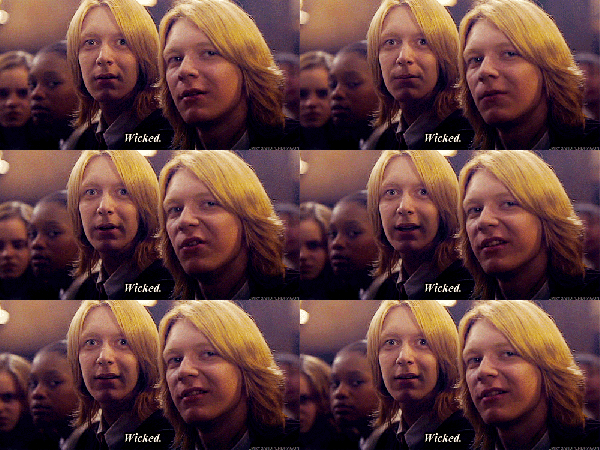
3. Differences. We both have our own strengths and weaknesses, in writing as in everything else. Liz has a great ear for dialogue. I like researching and writing more descriptive passages. Liz likes happy endings. I like doing horrible things to our characters.

tumblr_inline_n38k5y6NFr1reg6lt

4. Love. We love each other. And writing together means we get to do something we love with somebody we love. Life doesn’t get much better than that.

tumblr_loolof6fuB1qdcotqo1_500

Thanks for reading. x